Get fluent in emotions
If you experience strong feelings that you find difficult to handle, one important step towards easing that discomfort is to improve your language skills around emotions.
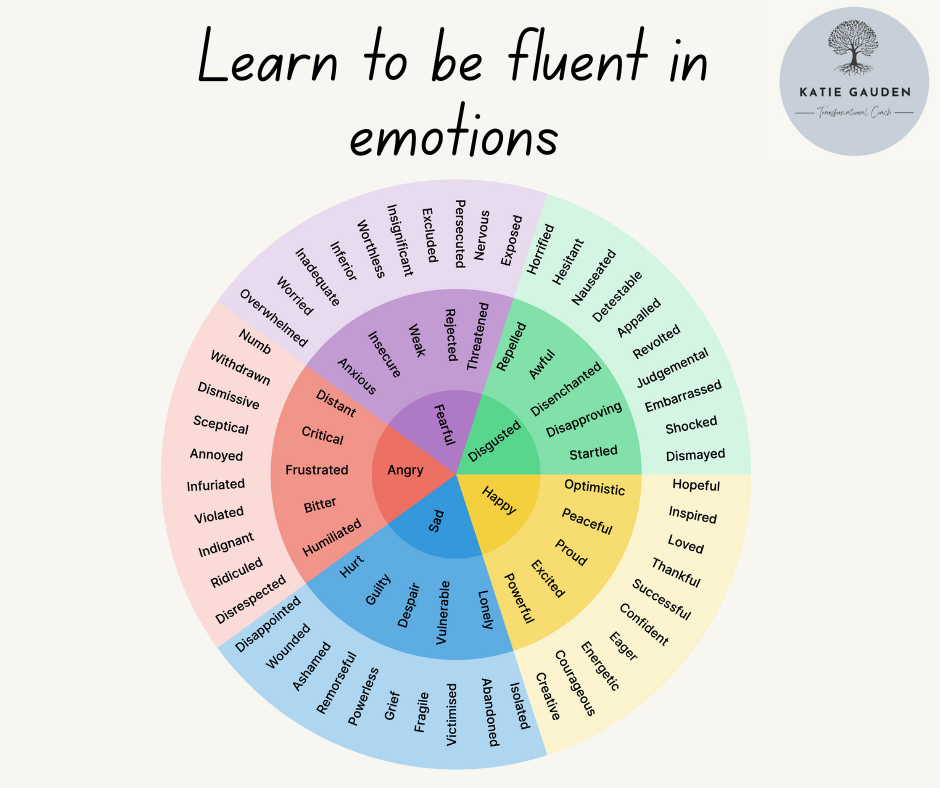
Many of us can identify when we're feeling or displaying anger, for example, but being able to name that emotion more specifically as frustration or annoyance, or perhaps even a sense of violation , can help us to pinpoint the root of this feeling.
Examining the bodily sensations that we're experiencing and giving specific language to what we're feeling enables us to bring calm to any extreme emotions. As we look to understand our response to a situation, we engage the pre-frontal cortex (the more intelligent part of our brain). Once we have more information to hand, we can then look to process and deal with the cause behind our strong feelings.
An "Emotions Wheel" (see below) is a great tool for helping us to expand our vocabulary around feelings as we look to take steps towards becoming more emotionally-intelligent, and to better handle those more uncomfortable emotions. DM me if you'd like me to send you a pdf of an Emotions Wheel.
Equally, a coach like me can help you to talk through and understand what's going on in your thought-life and emotions, as well as work with you to find greater clarity, confidence and contentment. Check out my website www.coachingtimewithkatie.com
and get in touch if you'd like my support in this area.
P.S. Being more emotionally fluent can also help with more uplifting feelings. By growing a greater self-awareness around what led to that sense of joy or peace, for example, you can then look to introduce more of that into your life as a result.


Comments